Disclosure: This post may contain affiliate links, meaning I get commission if you decide to make a purchase through my links, at no cost to you. Please read my Affiliate Disclosure for more information.
“I’d love to grow a cut flower garden… but I just don’t have the time.”
If you’ve ever thought that — you’re not alone. It’s one of the most common things I hear. And I get it. Between work, family, and everything else on your plate, the idea of adding a garden — especially one designed for cutting — can feel like just one more thing to juggle.
But here’s the honest truth:
No garden is zero effort. But the effort it needs depends entirely on what you want from it.
Three questions. Two minutes. A flower list chosen for your actual garden, not some idealised one.
Let’s find your flowers.

You can spend hours coaxing along a single rose bush. Or grow a whole patch of seasonal flowers in less time than it takes to mow a lawn. It all comes down to your choices, your rhythm, and your version of success.
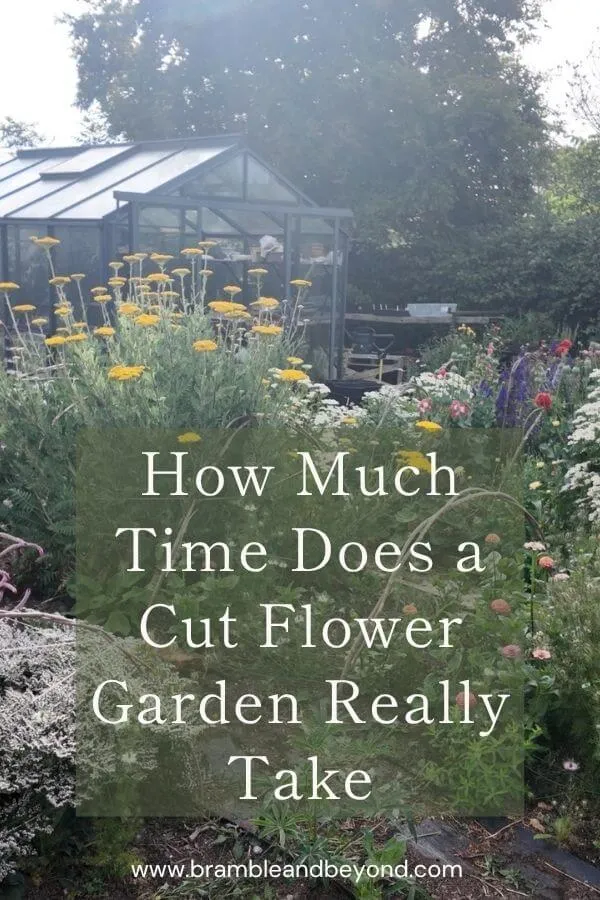
To help lift the lid on what’s actually involved, I thought I’d walk you through what it really takes — season by season — to tend my 10x10m cut flower patch.
Spoiler: it’s probably less than you think, especially when you work with your space, not against it.
Spring: The Busiest — But Full of Promise
Spring is the start of the show. It’s when plans turn into seedlings and beds wake up after winter. Yes, it’s the most hands-on time of the year — but it’s full of hope, and much of the effort comes in satisfying small bursts.
Here’s how my spring typically breaks down:
- Seed sowing: About 1 hour per session — I usually do three separate sowings across the season.
- Watering seedlings: Every few days, 10–15 minutes per go. Less if it’s raining, more if it’s sunny and dry.
- Mulching and bed prep: Roughly 1 hour per bed (I have 8 beds, but I don’t do them all at once).
- Planting out: Around 1 hour per bed, spaced out depending on when plants are ready and the weather’s cooperating.
- Turning the compost: My least favourite job — 2 hours once in spring. It’s messier in my mind than in reality, but I still dread it every year.
- Waking the Dahlias: Bringing the dahlias out of their winter sleep and planting them up in pots to get them going early. Maybe 1-2 hours work, done once. If my growing conditions were different (I have clay soil and wet weather), I would be very tempted to leave them in the ground and take my chances with the frost.
How I make spring easier:
- I start seeds in soil blocks indoors, so they’re easier to check and don’t need greenhouse visits every day.
- I transplant seedlings into deep seed trays, which means I skip the fiddly potting-on stage.
- I don’t rush to plant everything out in one go — spacing it across weeks makes the work feel lighter.
Spring takes focus, yes. But it also gives so much back. The first signs of green, the neat rows of baby plants, the feeling that something is beginning — it’s worth every minute.
Summer: The Joy Season
Summer is when the patch really starts to shine. Most of the heavy lifting is behind you, and the garden is humming with colour, life, and potential. This is when the garden begins to give — and the effort feels more like reward.
Here’s what I do in summer:
- Weeding: Mulching earlier in the year makes this a breeze. I spend maybe 30 minutes a week keeping things tidy, and I don’t stress about the odd weed.
- Harvesting, conditioning, and arranging: Around 1 hour per week, though this depends on how much I’ve grown and how much I want to bring indoors.
- Drying flowers: When I’m doing a lot, this adds another hour or so to my week — but again, only if I’ve harvested big batches.
Harvesting is the most time-consuming task in summer — but it’s also the most enjoyable.
It becomes a kind of ritual: scissors in one hand, buckets of water in my trolley – and yes I would thoroughly recommend a trolley over a wheelbarrow, here’s my trolley. I usually cut in an evening (early morning gardening is not for me). I then let them rest in water in my barn overnight and come back the next day to arrange them or process them for drying.
That flexibility is part of what makes growing your own feel freeing, not demanding.

Autumn: The Reset
Autumn is a quieter but purposeful season — a time to tidy, protect, and plan ahead. It’s about laying the groundwork for less stress next spring.
My autumn jobs look like this:
If you want plenty of flowers without turning gardening into a second job, The Flower Files might be just what you need.
- Mulching: Around 30 minutes per bed. This keeps weeds down and moisture in — saving me time for months to come.
- Autumn seed sowing and planting out: 1–2 hours total. If these seeds make it through winter, they’ll flower earlier than spring sowings. If not, I sow again in spring.
- Turning compost: Again — 2 hours, usually just once in autumn.
- Continuing with the harvesting and drying for as long as the crops allow or I want.
- Lifting the Dahlias: 2 hours of lifting and prepping to get them ready for their winter sleep.
I’m also starting to experiment with cover crops, which may help build soil health and reduce my reliance on compost long term. If it works, it could mean less barrowing, less digging, and fewer hours spent shifting mulch.
Autumn is about gentle closure. There’s something satisfying about putting the garden to bed — especially knowing you’ve set yourself up well for what comes next.
Winter: The Quiet Season
Winter is a gift — a pause. The garden slows, and so do I. There’s not much to do, but there’s plenty of dreaming, sketching, and imagining.
Occasionally, I’ll:
- Prune anything that needs it
- Put in new supports or adjust existing ones
- Sow some hardy annuals (larkspur and snapdragons). This is my new years day tradition. Well, I did it this year and it was a huge success, so I will be continuing with this.
But mostly, I leave things be. I rest. The soil rests. And I start making lists of what I want to grow next.
One of my quiet joys is adding long-lasting support structures in winter — hazel branches, for example — that won’t need fiddling come spring. The more I can set up in these slow months, the less I have to scramble later.
So… How Much Time Does It Really Take?
To give you a realistic picture, here’s a rough breakdown of my time spent on the cutting patch throughout the year:
| Season | Estimated Time | Main Focus Areas |
|---|---|---|
| Spring | 2–3 full days across 3 months | Sowing, planting, bed prep, compost |
| Summer | 1–2 hours per week | Harvesting, weeding, drying |
| Autumn | 8 hours total across 3 months, + harvesting time for however long I want to continue with it. | Mulching, compost, seed sowing, harvesting |
| Winter | Minimal | Planning, light tidying, structural work |
This is for a 10x10m flower patch, with 8 beds covering almost 40m².
If you’re working with a single raised bed, or just a few pots on a patio, your time commitment could be as little as 30 minutes a week — or even less.
Final Thoughts: It’s Not About Doing More
When you picture a cut flower garden, it’s easy to imagine constant pruning, deadheading, and daily tending. But you really don’t have to do it all to enjoy it.
You can grow joy in a single pot of cosmos.
You can sow one weekend and skip a week of weeding.
You can choose what you want from your garden — and let go of the rest.
And here’s something else I’ve learned along the way:
Stop saving your best flowers.
It’s tempting to leave the fullest blooms in the patch, thinking you’ll enjoy them longer that way. But more often than not, they fade before you really notice them. If a flower brings you more joy in a vase on your kitchen table, pick it. The garden will grow more. That’s the magic of a cutting garden.
Don’t wait for “someday” to enjoy what you’ve grown. Take the joy now.
Your garden doesn’t need you to be perfect. It just needs you to show up — when you can, how you can, in your own way.
Next Read:
If this post gave you a bit of permission to relax into growing, and you’re curious about how to design a garden that gives you the most joy with the least effort, you’ll love this one:
Getting the Most Out of Your Garden for the Least Amount of Work
A quick aside: I built a little app for flower growers who want gentle reminders about what to do and when - without it turning into another thing to feel guilty about. It's called the Flower Grower Companion. You tell it your location and your flowers, it tells you what actually needs doing this week (and just as importantly, when there's nothing to do at all)
Have a look