Disclosure: This post may contain affiliate links, meaning I get commission if you decide to make a purchase through my links, at no cost to you. Please read my Affiliate Disclosure for more information.
What if you could plant something once… and never need to buy it again?
No trays of seedlings on the windowsill.
No carefully labelled rows.
No annual re-buying of seeds “just in case.”
Three questions. Two minutes. A flower list chosen for your actual garden, not some idealised one.
Let’s find your flowers.

There’s a small group of flowers that take care of all of that for you. They grow, flower, set seed, and then, without any involvement from you, return the following year.
Often in greater numbers.
Once they’re in your garden, they tend to stay. And if you’re trying to make things feel a bit easier (and a bit less expensive), they’re worth knowing about.
What Are Self-Seeding Flowers?
Self-seeding flowers follow a simple pattern:
- They flower
- They produce seed
- They drop those seeds onto the soil
- New plants appear the following season
That’s it.
Perennials come back from the same plant each year. Self-seeders go a step further – they create entirely new plants, so your garden gradually fills out on its own.
It’s one of the least demanding ways to grow a cut flower garden. You’re not starting from scratch each spring. You’re just… continuing.
These abundant and helpful self-seeders are often called volunteers.
Here is a video I created about some examples (again crazy AI face):
1. Larkspur
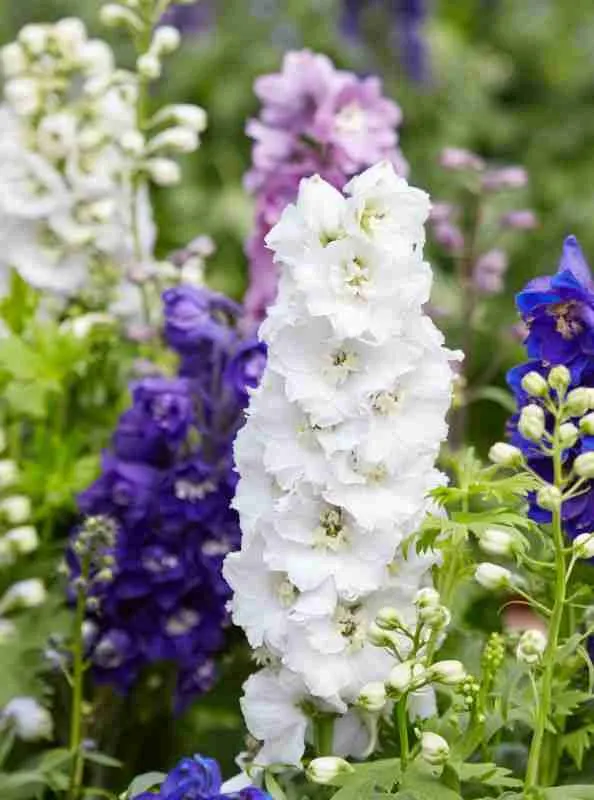
Larkspur is one of those plants that feels slightly elusive – until it doesn’t.
For years, you might get patchy results. Then one season it works, and suddenly you have more seedlings than you know what to do with.
It produces tall, soft spires in early summer, which are useful for adding height to arrangements. It also dries well, which is a bonus.
At the end of the season, it forms seed pods. Leave them in place and they’ll scatter naturally.
What to know:
If you want plenty of flowers without turning gardening into a second job, The Flower Files might be just what you need.
- Seedlings often appear early in spring
- Slugs can wipe them out overnight, so a bit of protection helps
- Once established, it tends to improve year on year
2. Nigella (Love-in-a-Mist)
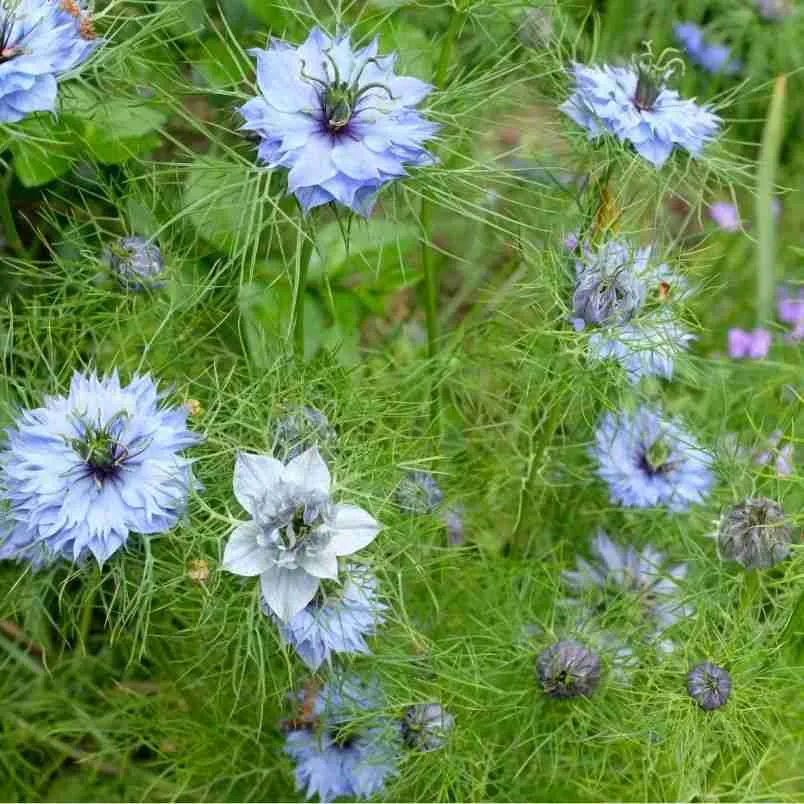
Nigella is generous to the point of being slightly chaotic.
It has delicate flowers surrounded by fine, feathery foliage, followed by those distinctive balloon-shaped seed pods.
Those pods are full of seeds. Leave a few in place and you’ll almost certainly see it again the following year – often in places you didn’t plan (not to be confused with larkspur, as they look very similar in the early seedling stage).
It’s useful fresh and dried, which makes it one of the more reliable “dual-purpose” plants.

3. Cerinthe major (Honeywort)
Cerinthe sits slightly outside the usual palette.
Silvery-blue foliage, deep purple bracts, and a shape that doesn’t try too hard. Bees love it.
It drops larger seeds than most, and once it’s settled, it tends to reappear without fuss.
It works well as a filler in arrangements – looser, softer, less structured.
Worth knowing:
It doesn’t behave like a neat border plant. It moves around a bit. That’s part of the appeal.

4. Calendula
If there’s one plant that proves the point, it’s calendula.
Grow it once and there’s a good chance you’ll still have it years later.
It flowers for months, produces plenty of seed, and doesn’t need much encouragement to come back, often several times within a season.
It’s also unusually useful:
- Petals can be used in cooking
- Often included in simple skincare
- Attracts hoverflies (which deal with aphids)
- Works well as a cut flower
If you were only going to grow one self-seeder, this would be a sensible choice.

5. Ammi majus (Bishop’s Flower)
Ammi gives that airy, natural look people often try (and fail) to recreate.
It produces delicate white umbels that work well in bouquets, especially if you like a looser style.
Once established, it will self-seed if you let a few plants complete their cycle.
A couple of practical notes:
- It can reach around a metre tall
- Benefits from a bit of space or a position at the back
- May need support in heavy rain
Even when it flops slightly, it still looks good. Possibly better.
How to Get Self-Seeding Flowers to Actually Return
There are only a few things that really matter:
1. Leave the seed heads
Cut some flowers, but not all. Let a few finish their cycle and drop seed.
2. Learn the seedlings
They often appear early in spring. If you don’t recognise them, it’s very easy to weed them out without realising.
3. Accept a bit of movement
They won’t always grow exactly where you want them. You can move them when small, or leave them and see what happens.
Some of the best combinations come from not interfering too much.
A Garden That Starts to Take Care of Itself
Between perennials and self-seeding flowers, something shifts.
You stop restarting every year.
The garden fills out.
Things appear without planning.
It’s not completely hands-off. But it’s a long way from high effort.
And once it’s working, it’s surprisingly difficult to go back.
If You Want to Build on This
If you’re thinking about a garden that needs less input overall, self-seeders are one piece of it.
I’ve also put together a companion guide to easy perennials that come back every year. Between the two, you can cover a lot of ground without adding more work.
A quick aside: I built a little app for flower growers who want gentle reminders about what to do and when - without it turning into another thing to feel guilty about. It's called the Flower Grower Companion. You tell it your location and your flowers, it tells you what actually needs doing this week (and just as importantly, when there's nothing to do at all)
Have a look